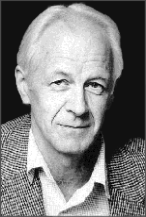
 Last week was the premier here of a film called "Evolutionary". It's the story of Allan Wilson, arguably one of the top evolutionary biologists of the last 50 years. Since I work as part of the Allan Wilson Centre for Evolutionary Biology, I got to attend the premier at Te Papa (the big natural history museum downtown), complete with nibbles and wine and a speech by the filmmaker.
For those of you who don't know beans about Allan Wilson (and I didn't know much before this evening), he basically proved the concept of a molecular clock and really brought PCR (polymerase chain reaction or the copying of DNA fragments) and DNA sequencing together with evolutionary studies. He was a biochemist who took on evolutionary questions, and bridged a gap in the scientific community that led to some major insights.
See, initially everyone thought the only way to look at the divergence of species and populations was to study the fossil record. But Wilson proved that you could use proteins and genes to look backward in much the same way, and much more throughly (since the fossil record is pretty spotty).
You know the whole mitochondrial Eve" thing? Where we can all be traced back to "one lucky mother" in Africa? That's Allan Wilson's work.
And you know how we're only 1% genetically different from chimpanzees? That's Allan Wilson, too.
The film was mostly interviews with Wilson's former graduate students and post-docs. Wilson was born in New Zealand but spend most of his professional career at UC Berkeley. A great scientist and, by all accounts, an outstanding mentor, it was a real tragedy when he passed away at the height of his career from leukemia in 1991 at 58 years of age.
F*ing leukemia.
Anyway, his legacy continues on in the work of molecular ecologists (like myself) everywhere. And the coolest part is that some of his own work has been used to improve leukemia treatment. Apparently the film will be shown on public television in the states (since it was funded by UC Berkeley), so keep an eye out for it. Some of my friends here who aren't scientists say they found it really accessible when they saw it as part of the Wellington International Film Festival.


No comments:
Post a Comment